
This website uses cookies
We use cookies to personalise content and ads, to provide social media features and to analyse our traffic. We also share information about your use of our site with our social media, advertising and analytics partners who may combine it with other information that you’ve provided to them or that they’ve collected from your use of their services.
Consent Selection
Details
  • Necessary cookies help make a website usable by enabling basic functions like page navigation and access to secure areas of the website. The website cannot function properly without these cookies.
  • Preference cookies enable a website to remember information that changes the way the website behaves or looks, like your preferred language or the region that you are in.
    • We do not use cookies of this type.

  • Statistic cookies help website owners to understand how visitors interact with websites by collecting and reporting information anonymously.
    • We do not use cookies of this type.

  • Marketing cookies are used to track visitors across websites. The intention is to display ads that are relevant and engaging for the individual user and thereby more valuable for publishers and third party advertisers.
    • We do not use cookies of this type.

  • Unclassified cookies are cookies that we are in the process of classifying, together with the providers of individual cookies.
    • __emg_sidPending
      Maximum Storage Duration: 1 dayType: HTTP Cookie
      __emg_vidPending
      Maximum Storage Duration: 1 yearType: HTTP Cookie
      nl-read-countPending
      Maximum Storage Duration: PersistentType: HTML Local Storage
Cookie declaration last updated on 8/12/26 by Cookiebot
[#IABV2_TITLE#]
[#IABV2_BODY_INTRO#]
[#IABV2_BODY_LEGITIMATE_INTEREST_INTRO#]
[#IABV2_BODY_PREFERENCE_INTRO#]
[#IABV2_BODY_PURPOSES_INTRO#]
[#IABV2_BODY_PURPOSES#]
[#IABV2_BODY_FEATURES_INTRO#]
[#IABV2_BODY_FEATURES#]
[#IABV2_BODY_PARTNERS_INTRO#]
[#IABV2_BODY_PARTNERS#]
About
Cookies are small text files that can be used by websites to make a user's experience more efficient.

The law states that we can store cookies on your device if they are strictly necessary for the operation of this site. For all other types of cookies we need your permission.

This site uses different types of cookies. Some cookies are placed by third party services that appear on our pages.

You can at any time change or withdraw your consent from the Cookie Declaration on our website.

Learn more about who we are, how you can contact us and how we process personal data in our Privacy Policy.

Please state your consent ID and date when you contact us regarding your consent.
NewsLayer.com
NewsLayer PulseLIVEBTC$63,764+0.55%ETH$1,894+0.86%SOL$76.12+0.74%XRP$1.01+0.50%DOGE$0.0702+0.88%ADA$0.1832+0.46%Total Cap$2.27T-0.03%Layer Index40 Neutral
External ReportingĐăng 20 giờ trước

National Bank Canada Crypto ETF Highlights XRP and Bitcoin Stakes

National Bank of Canada has quietly become the latest traditional lender to show up in crypto’s institutional ledger, disclosing positions in both an XRP ETF and several Bitcoin ETFs through a regulatory filing with the U.S. Securities…

National Bank Canada Crypto ETF Highlights XRP and Bitcoin Stakes
Source The Cryptonomist 5 phút đọc
Image via The Cryptonomist

Market Context

Bitcoin

BTC

$63,764

+0.55% 24h

XRP$1.01+0.50%

Layer Index

40

↑ 5 pts in 24h

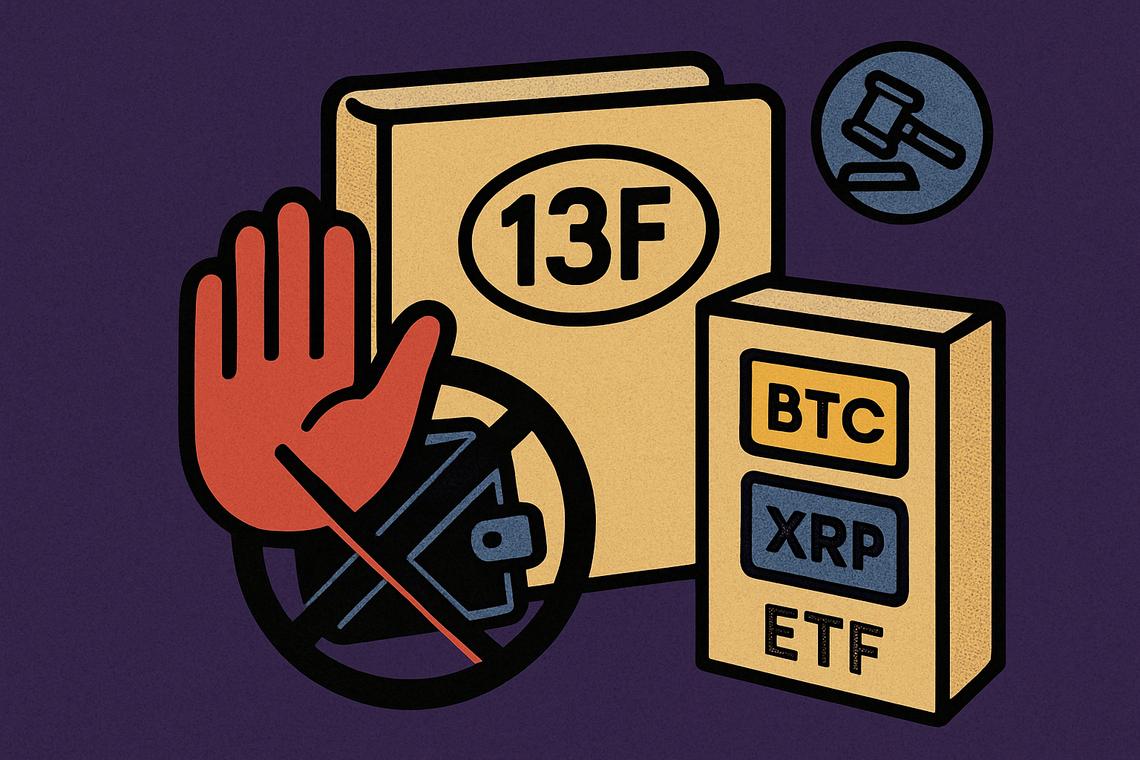
National Bank of Canada has quietly become the latest traditional lender to show up in crypto’s institutional ledger, disclosing positions in both an XRP ETF and several Bitcoin ETFs through a regulatory filing with the U.S. Securities and Exchange Commission. The National Bank Canada crypto ETF disclosure, made public in a Form 13F filing covering holdings as of June 30, 2026, gives a rare glimpse into how a major Canadian financial institution is approaching digital assets — not through direct token ownership, but through regulated investment wrappers listed on U.S. exchanges.

Key takeaways

  • National Bank of Canada disclosed crypto ETF holdings in a Form 13F filing dated June 30, 2026.
  • The bank held 3,848 shares of Bitwise’s XRP ETF, worth roughly $330,000.
  • Bitcoin ETF exposure through ProShares and Fidelity funds totaled approximately $6.4 million.
  • These are ETF positions, not direct custody of XRP or Bitcoin tokens.
  • Bitcoin still dominates the bank’s crypto-linked portfolio, dwarfing its XRP exposure by a wide margin.

National Bank of Canada’s Crypto ETF Holdings Revealed

The filing shows a bank testing the waters of crypto exposure through familiar, regulated products rather than jumping straight into token ownership. That distinction shapes almost everything about how this disclosure should be read.

Details from the June 30, 2026 Form 13F Filing

According to the filing, National Bank of Canada reported 3,848 shares of Bitwise’s XRP ETF, valued at approximately $330,000. Alongside that position, the bank disclosed Bitcoin ETF exposure through funds managed by ProShares and Fidelity, totaling around $6.4 million. Both Yahoo Finance and CoinGape corroborated the disclosure, framing it as part of a broader pattern of institutional filings that surface each quarter through SEC paperwork.

Form 13F filings are required of large institutional investment managers and offer a snapshot of what they held at the close of a reporting period. They’re backward-looking by design — a picture of positioning weeks or months after the fact — but they remain one of the few public windows into how banks, pension funds, and asset managers are treating digital assets inside regulated portfolios.

Distinction between ETF Holdings and Direct Crypto Custody

It’s worth repeating plainly: this is ETF exposure, not direct custody of XRP or Bitcoin. National Bank of Canada isn’t reported as holding tokens on-chain, running wallets, or managing private keys. It owns shares in listed securities that track or reference crypto price movements.

That difference matters for how the market interprets the news. Direct token custody would signal something about a bank’s operational readiness and appetite for handling crypto infrastructure directly. Holding ETF shares instead signals comfort with crypto exposure wrapped inside a securities framework — a meaningfully different, and lower-friction, form of engagement.

Comparative Scale and Significance of XRP and Bitcoin ETF Exposure

Bitcoin’s $6.4 million footprint compared with XRP’s roughly $330,000 position tells a clear story about where institutional confidence currently sits. The gap isn’t subtle — it’s nearly twenty times larger in Bitcoin’s favor.

Bitcoin’s Dominance in Institutional ETF Portfolios

Bitcoin remains the dominant crypto asset inside institutional ETF portfolios compared to XRP, and this filing reinforces that hierarchy rather than challenging it. Bitcoin has the deepest ETF market of any digital asset, the strongest macro narrative among traditional investors, and the clearest track record of institutional positioning. National Bank of Canada’s much larger allocation to ProShares and Fidelity Bitcoin ETFs simply reflects that established pecking order.

Early Institutional Interest in XRP ETFs

The XRP position, by contrast, looks more exploratory. A $330,000 stake isn’t a major allocation for a bank of this size, but it’s visible, regulated exposure to an asset that has spent years navigating regulatory uncertainty in the U.S. XRP ETF holdings at this scale suggest institutions are willing to test broader crypto products beyond Bitcoin, even if the dollar figures involved remain modest for now. Why this matters: it hints that altcoin-linked ETFs are starting to earn a place in institutional filings, even if adoption is still at an early, cautious stage compared with Bitcoin’s well-established footing.

Implications of ETF-Based Crypto Exposure for Institutional Adoption

The broader significance of this filing has less to do with the dollar amounts and more to do with the mechanism. Banks and asset managers increasingly don’t need to custody digital tokens directly to participate in crypto markets — they can rely on ETFs, trusts, futures, and other instruments that already fit inside existing compliance and reporting systems.


Regulated Securities Framework vs Direct Token Custody

Holding shares of an ETF or trust is fundamentally different from holding XRP or Bitcoin directly, and that distinction shapes how regulators, auditors, and risk committees evaluate the exposure. A Bitcoin ETF institutional exposure of $6.4 million sits neatly inside a bank’s existing securities infrastructure, with no need for new custody solutions, wallet management, or blockchain-specific risk controls.

Normalization of Crypto Exposure Among Financial Institutions

National Bank of Canada’s Form 13F crypto disclosures fit into a wider pattern that’s becoming routine across traditional finance: banks reporting crypto-linked ETF positions as a normal part of quarterly filings, rather than as a novelty. Why this matters for the market: as more institutions follow this path, crypto exposure through regulated wrappers becomes less of an experiment and more of a standard portfolio line item — even as direct on-chain participation from these same institutions remains rare.

For Bitcoin, that normalization is already well underway. For XRP and other digital assets outside Bitcoin, the trend is still forming, one modest filing at a time.

FAQ

What did National Bank of Canada disclose in its latest Form 13F filing regarding crypto ETFs?

The bank disclosed holdings in US-listed XRP and Bitcoin ETFs as of June 30, 2026, including 3,848 shares of Bitwise’s XRP ETF and about $6.4 million in Bitcoin ETF exposure through ProShares and Fidelity funds.

Does National Bank of Canada directly own XRP or Bitcoin tokens?

No. The disclosed holdings are ETF positions, which are regulated securities representing exposure to crypto price movements, not direct ownership or custody of the underlying tokens.

How does the size of the bank’s Bitcoin ETF holdings compare to its XRP ETF holdings?

Bitcoin ETF holdings are significantly larger, with around $6.4 million in exposure compared to approximately $330,000 in XRP ETF shares.

What does this ETF-based exposure indicate about institutional adoption of cryptocurrencies?

It suggests institutions prefer gaining crypto exposure through regulated investment products like ETFs rather than taking on direct token custody, a pattern that’s becoming increasingly common among traditional financial institutions.

Article produced with the assistance of artificial intelligence and reviewed by the editorial team.

Follow the Story

  1. Aug 12National Bank Canada Crypto ETF Highlights XRP and Bitcoin Stakes
  2. Aug 13Does Ukraine Need Bitcoin Mining for Its Post-War Reconstruction?
  3. Aug 13US Spot-Bitcoin ETFs See $61.1 Million in Net Outflows After One Day of Inflows
  4. Aug 13Strategy is selling: what happens when the biggest corporate Bitcoin holder turns net seller

Attribution

Originally reported by The Cryptonomist

Get stories like this, daily.

Daily crypto + regulation intelligence, straight to your inbox. Free.

Tin Liên Quan