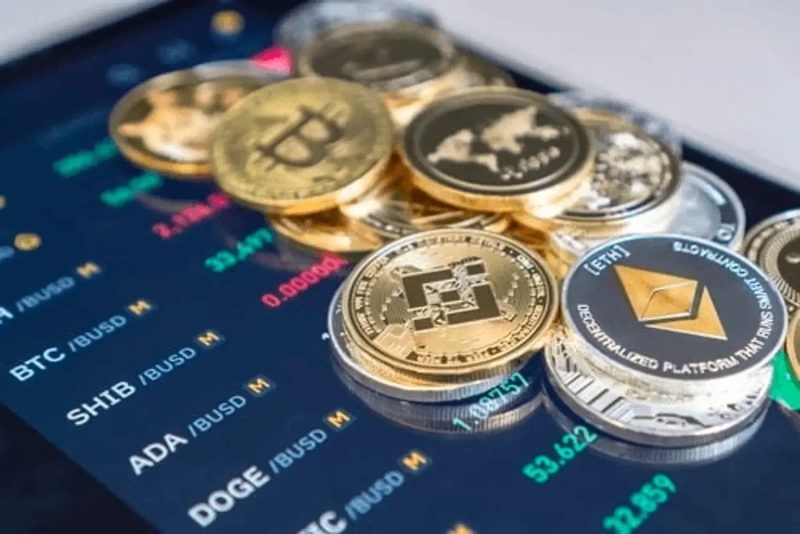

The best crypto tokens under $5 are highly liquid, active, and have favorable tokenomics. Additionally, they have strong demand catalysts that can drive their price higher.

Contents
Best Crypto Tokens Under $5 to Buy Before the Next Big Rally
The best performing ones are XRP▲$1.13, SUI▲$0.7718, Cardano (ADA▲$0.1791), Stellar (XLM▲$0.2040), and Hedera (HBAR▲$0.0730), which cover a diverse set of narratives from payments to DeFi to tokenization of real-world assets.
What Makes an Under-$5 Crypto Worth Buying?
The screen for what is the best crypto under $5 to buy basically looks for fundamentals like usage, liquidity, supply structure, and catalysts that should attract capital and institutional adoption.
In March 2026, Stellar said that its network services 67 products, backed by $1.4 billion in tokenized real-world assets, while Ripple said XRPL was building out infrastructure for tokenized assets and on-chain finance.
Supply and future emissions may also matter, and a major difference between circulating supply and total supply could lead to dilution as locked tokens are gradually released to the market; for that reason, tokenomics are important for finding cheap crypto with potential.
Read More: Crypto Market Industry Shakeout 2026: Why Crypto Is Entering a Major Consolidation
Price vs. Market Cap: Why Cheap Does Not Always Mean Undervalued
Tokens are distinguished by unit price; a $1 token may not be cheaper than a $100 token. Market capitalization is calculated by multiplying price by circulating supply. Therefore, cryptocurrency market cap is generally considered a better comparison than sticker price.
FDV is based on the assumption that all tokens in circulation have the same price as the current market price. A large difference between the two signals dilution risk. Thus, a search for crypto under $5 with high potential cannot rely solely on price.
| Token | Primary Narrative | Key 2026 Catalyst | Main Risk |
| XRP | Payments & tokenization | Institutional products and XRPL adoption | Large market cap |
| SUI | Layer-1 & DeFi | Growing institutional access | Token unlocks |
| ADA | DeFi & stablecoins | USDCx and scaling upgrades | Low DeFi activity |
| XLM | Payments & RWAs | Institutional tokenization | Smaller ecosystem |
| HBAR | Enterprise tokenization | Archax and institutional use cases | Adoption uncertainty |
The 5 Tokens With the Strongest Rally Setup
Five projects have been shortlisted: XRP, on payment and institutional-level decentralized finance; SUI, on Layer-1 growth opportunities; ADA, on Cardano’s DeFi and stablecoin ecosystem; XLM, on payments and tokenized assets; and HBAR, on enterprise tokenization.
Cardano’s USDCx was added in February 2026. Stellar features institutional deployments such as Franklin Templeton, WisdomTree and MoneyGram.
Another tokenization platform is the regulated digital asset marketplace Archax, which will enable tokenized securities on Hedera with real-time cash flows beginning in June 2026. Though there are no guarantees of return, this may be a deciding factor in Hedera’s value when searching for the best altcoins to buy before the next rally.
XRP — The Strongest Under-$5 Crypto for Institutional Adoption
Why XRP Is Still One of the Biggest Altcoin Bets
As of August 2026, XRP is still in the top 10 cryptocurrency list with a total market cap of around $66 billion. The basis for XRP investment thesis is that it powers payments, settlement, and tokenized finance on XRP Ledger.
The ruling also cleared some of the regulatory uncertainty; Ripple and the SEC dropped their appeals of the ruling in August 2025, ending years of litigation, a major historical overhang for XRP.
XRP ETFs and Growing Institutional Demand
After XRP investment products release on US exchanges, institutional interest in XRP has increased. Franklin Templeton launched XRPZ in November 2025, with Bitwise and 21Shares both launching XRP ETFs.
They provide regulated exposure to XRP in the United States without owning the asset directly and add to its status as one of the best cryptocurrencies under $5 with institutional infrastructure.
Ripple, Payments and the Tokenization Narrative
Ripple claims that its payment network covers 90% of the international foreign exchange market. XRPL is capable of real-time settlement and has tokenized goods and assets. Ripple USD (RLUSD▲$0.9999), Ripple’s USD-pegged stablecoin, operates natively on XRPL and Ethereum blockchains.
The ability to tokenize real-world assets is becoming increasingly concrete: Ripple reported that there were over $474 million of such assets on XRPL as of April 2026, providing an institutional narrative for XRP beyond payments.
XRP Price Outlook Before the Next Crypto Rally
As of August 12, 2026, XRP’s price is at around $1.06, more than 70% below its highest price reported by CoinGecko of $3.65 despite ETF access and XRPL continuing development work.
Most crypto investors think the ETF demand, liquidity, and network adoption can take prices higher indefinitely, with crypto under $5 to buy, which is true, but there are no set price targets anyone can use absent a crypto-specific supply crunch or other catalysts.
What Could Stop XRP From Breaking Higher?
Valuation is also a hurdle. XRP has a market cap of around $66 billion, meaning the new investment needed for percentage returns would be bigger compared to lower-cap coins. Large token supplies may also make price comparisons misleading.
Another risk is weakness in the broader market; XRP has been far below its all-time high, and the prospectus of XRP investment vehicles warns of volatility and risk of heavy losses. ETF access and tokenization deliver a more favorable bull case but do not eliminate downside.
SUI — The Under-$5 Layer-1 With the Biggest Growth Potential

Why SUI Is Gaining Ground Against Ethereum and Solana
Sui is a Layer-1 blockchain based on the Move programming language, an object-based data model, and parallel transaction execution.
These design choices were made to promote a high throughput and consumer use case that could not be supported by Ethereum’s execution model. In April 2026, CoinDesk described Sui as a differentiated Layer-1 optimized for consumer Web3 applications.
Ethereum and Solana remain much larger ecosystems, and while Sui network has not supplanted either, its position as one of the best altcoins under $5 still reflects the potential to capture a larger share of Layer-1 activity from a much smaller base.
Sui’s DeFi and Institutional Adoption Story
Sui’s DeFi ecosystem peaked to over $2 billion in TVL in January 2025 but, like other DeFi ecosystems, has seen an important decline. Infrastructure for institutional Sui projects has developed since then, including the formation of a Nasdaq-listed SUI ETF with staking in February 2026, created by Canary, alongside Sui ETF by 21Shares (TSUI).
Beyond ETFs, Nasdaq-listed Sui Group Holdings held about 108 million SUI at the start of 2026 and was pursuing a SUI accumulation strategy while also participating in the network’s DeFi economy.
The regulated investment products and established on-chain ecosystem give SUI a measurable adoption case. But this doesn’t guarantee a revival in network activity or price.
SUI Token Unlocks and Supply Risks
Supply dilution is the most obvious structural risk. As of late July, Tokenomist estimated 4.05 billion SUI or 40.52% of the maximum 10 billion supply, had been unlocked. The vesting period ends in 2030.
According to analytics platform DefiLlama, approximately 4.08 billion SUI tokens are in circulation. Almost 60% of them are not in circulation. Future supply increases will add pressure, unless demand increases proportionately.
SUI Price Potential in the Next Bull Market
SUI is currently priced at ~$0.69 and has a market cap of ~$2.8 billion. It would have a market cap of ~$8.2 billion if it were to reach $2 again, or ~$12.2 billion if it were to reach $3 again, based on today’s circulating supply. A return to its all-time high of near $5.35 in January 2025 would require a market cap above $21 billion before token unlocks.
A more bullish $10 target, as some analysts forecasted during SUI’s rise in 2025, would price SUI over 14 times higher than today’s price, or worth over $40 billion at the current SUI circulating supply. So, while a SUI price target of $10 or higher is a very positive bull market scenario, it’s not guaranteed to happen.
Cardano (ADA) — Can This Sleeping Giant Wake Up?
Why ADA Remains a Top Under-$5 Crypto
Cardano has continued to be one of the more prominent L1s even through the protracted bear market. As of August 12, 2026, ADA price is around $0.185, with a market cap of $6.9 billion and a circulating supply of around 37 billion. CoinGecko ranks it 16th by market capitalization.
That scale, deep exchange liquidity and established ecosystem keep ADA among the best crypto under $5 to buy in 2026. However, Cardano’s decentralized finance (DeFi) activity is low, with TVL estimated at $60-70 million respectively by DefiLlama, compared with other smart-contract platforms with a TVL of billions.
Read More: Is Chainlink Crypto Ready for the Top 5? Why LINK Could Be the Next Major Altcoin to Break Out
Cardano’s New Stablecoin and DeFi Push
A major 2026 development included the February rollout of USDCx, a USDC▲$0.9999-backed asset using Circle’s xReserve infrastructure to provide Cardano users with access to USDC liquidity without relying on customary third-party bridges.
Cardano has five native stablecoins, including USDCx, USDM, USDA, DJED, and iUSD, of which USDCx is currently the largest. According to Cardano, the stablecoin launch led to a 40% increase in stablecoin supply on Cardano blockchain in March.
Getting that infrastructure into regular use is another question; Cardano’s stablecoin capitalization is just $63 million, according to DefiLlama, which further illustrates the gap between its technical potential and decentralized finance adoption.
Scaling, Hydra and the Next Phase of Cardano
Hydra has become a production-ready Layer-2 scaling solution. Hydra Heads are a class of off-chain transactions that are committed back to Cardano Layer 1. Major upgrades such as Hydra 2.0 simplifying deposits into a Head and Hydra 2.2 introducing the partial fanout functionality have reduced UTXO constraints when closing a Head.
Cardano is also developing a second Layer-1 scaling solution, Leios, which already has a prototype layer in development that is moving to the Dijkstra era by 2026. Thus, Cardano’s scaling roadmap does not depend on Hydra.
ADA Price Potential if Altcoin Season Returns
ADA is currently priced at $0.185, 94% below its all-time high of $3.09 (CoinGecko). At an approximate current circulating supply of ~37 billion, this would require a market cap of $37 billion, $74 billion, and $114 billion for ADA to reach $1, $2, and $3.09 respectively, excluding the possibility of the circulating supply changing.
That would mean going from here back to $1 would be a 5.4x, and a return to $3.09 would be a 16.7x. Again, this is not a price prediction. This is simply illustrating what an aggressive altcoin recovery would look like.
For those seeking the best crypto under $5 with 10x potential, ADA would need to grow to around $1.85 from its current price to achieve this.
The Biggest Risk to the ADA Bull Case
The largest gap is still between Cardano’s valuations and its current activity, with DefiLlama reporting a DeFi TVL of around $61.5 million, an ADA market cap over $6 billion, and relatively low DEX volumes and fees.
ADA must also contend with other Layer-1 and Layer-2 ecosystems for developers, users, and liquidity, but infrastructure projects include USDCx, Hydra, and Leios. Rather, the bullish thesis hinges on the upgrades translating into materially increased economic activity rather than a series of technical milestones.
Stellar (XLM) — A Quiet Bet on the Tokenization Boom

Why XLM Could Benefit From Real-World Asset Adoption
By March 2026, Stellar’s institutional report indicated 67 tokenized products issued by 10 regulated issuers, including Franklin Templeton, WisdomTree and Spiko, with $1.4 billion in assets. April saw Stellar announcing on-chain RWAs had exceeded $2 billion.
It is also seeing new issuance. Tradable recently announced a partnership with Stellar to bring up to $1 billion of private credit assets onto the network. This could help strengthen the RWA thesis behind XLM as a cheap crypto to buy, although growth in tokenized-assets markets does not directly translate to growth in XLM demand.
Stellar’s Growing Role in Payments and Stablecoins
One of Stellar’s primary use cases is payments. An institutional report from Stellar boasts that $2.3 billion is settled on Stellar each month, on average, using 17 different stablecoins and more than nine fiat currencies. MoneyGram’s infrastructure enables cash-to-USDC transactions in 170+ countries.
As the stablecoin mix continues to grow, PayPal’s PYUSD▲$1.00 launched on Stellar in 2025. According to Stellar, $55.6 billion of stablecoin payment volume occurred across Stellar network in 2025. This existing payments network distinguishes XLM from other crypto tokens under $5, which are premised on a yet-unrealized future.
Tokenized Assets and Institutional Use Cases
Franklin Templeton has a tokenized Treasury exposure on Stellar, as does WisdomTree with several funds. Stellar also supports the trading of tokenized securities and other asset classes from ABN AMRO, Ondo and Spiko.