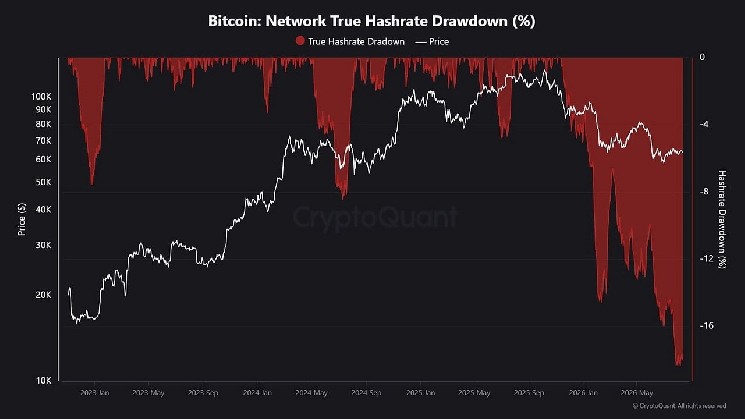
The pullback follows a rough stretch of profitability for miners. Publicly listed mining companies were losing an estimated $19,000 on every bitcoin produced as of late March, with a weighted average cash cost near $80,000 per coin against a spot price well below that level at the time.
Lastly, public miners sold a record 32,000 BTC in the first quarter alone, more coins than they sold across all four quarters of 2025 combined, as many opted to raise cash rather than keep expanding hashrate into a market where mining had become unprofitable at current difficulty and power costs.
Miners Are Becoming AI Landlords
Hut 8, Core Scientific, TeraWulf and IREN are among the mining companies that have signed multibillion-dollar AI and high-performance computing (HPC) hosting agreements over the past year. Hut 8’s contracted AI infrastructure portfolio alone has grown to $26.6 billion, and across the public mining sector, cumulative AI and HPC contracts now exceed $70 billion.
The logic is straightforward, i.e., mining facilities already come with the two things AI data centers need most: cheap electricity access and existing grid connections, making the conversion far faster than building new AI infrastructure from scratch. Research firm CoinShares has said listed miners could generate as much as 70% of their revenue from AI and HPC work by the end of 2026, up from roughly 30% when the firm published its most recent mining report.
That would mark a fundamental shift for an industry that has spent more than a decade defining itself primarily by hashrate output.
Beyond Hut8, Core Scientific and TeraWulf too have each signed multiyear hosting agreements with AI and cloud computing customers worth billions of dollars, arrangements that lock in predictable revenue years into the future in exchange for dedicating power capacity that would otherwise have gone toward new mining rigs.
Investors appear to be rewarding the shift even as bitcoin mining economics stay weak. A basket of mining stocks gained roughly 56% in early 2026 while bitcoin’s price fell about 17% over the same stretch. CoinShares still projects hashrate could climb back toward 1.8 zettahash per second by the end of 2026, but that forecast is conditional on bitcoin’s price recovering toward the $100,000 level, which would restore mining profitability and give companies a reason to reinvest in hashrate rather than AI hosting.