



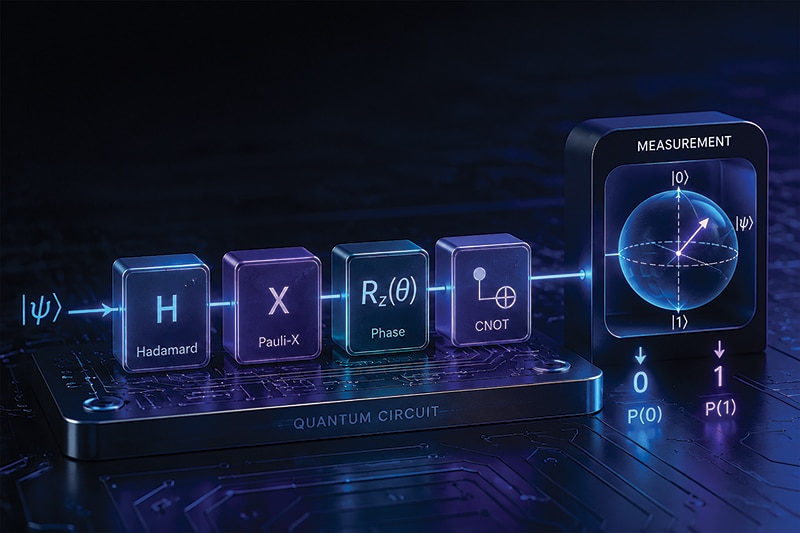
In the first article in this series on quantum computing (published in the May 2026 issue of OSFY), we explored some of the fundamental concepts of quantum computing, including qubits and the operation of the Hadamard gate. In this second article in the series, we will examine a few additional quantum gates and learn how measurements are performed on qubits to extract information from a quantum system.
Quantum Computing: Gates And Measurement
In the first article in this series on quantum computing (published in the May 2026 issue of OSFY), we explored some of the fundamental concepts of quantum computing, including qubits and the operation of the Hadamard gate. In this…
Open Source For You
Publisher
Aug 20, 2026 at 4:30 AM UTC · Updated 10 saat önce · 15 dk okuma
Çevriliyor…
As discussed in the previous article, our exploration of quantum computing will take place at three levels: the coding level, the mathematical level, and the hardware level. While we plan to use several platforms and programming languages to develop quantum algorithms throughout this series, we will begin with Qiskit, IBM’s quantum software development kit (SDK). In the previous article, we installed Qiskit and successfully executed our first quantum program.
Another theme we will explore throughout this series is the history of quantum computing and the latest developments in the field. In the previous article, we discussed the motivation behind quantum computers and the two groundbreaking algorithms that paved the way for practical quantum computing: Shor’s algorithm and Grover’s algorithm. In this article, we turn our attention to the various hardware architectures that have been proposed, tested, and developed in the quest to build a practical quantum computer.
Article Intelligence
Topics
Sponsored
Ad
NewsLayerLearn more
NewsLayer Premium
Unlock deeper intelligence.
Ad-free reading, exclusive research, and real-time onchain insights.
Go Premium