

This website uses cookies
We use cookies to personalise content and ads, to provide social media features and to analyse our traffic. We also share information about your use of our site with our social media, advertising and analytics partners who may combine it with other information that you’ve provided to them or that they’ve collected from your use of their services.
Consent Selection
Details
  • Necessary cookies help make a website usable by enabling basic functions like page navigation and access to secure areas of the website. The website cannot function properly without these cookies.
  • Preference cookies enable a website to remember information that changes the way the website behaves or looks, like your preferred language or the region that you are in.
    • We do not use cookies of this type.

  • Statistic cookies help website owners to understand how visitors interact with websites by collecting and reporting information anonymously.
    • We do not use cookies of this type.

  • Marketing cookies are used to track visitors across websites. The intention is to display ads that are relevant and engaging for the individual user and thereby more valuable for publishers and third party advertisers.
    • We do not use cookies of this type.

  • Unclassified cookies are cookies that we are in the process of classifying, together with the providers of individual cookies.
    • __emg_sidPending
      Maximum Storage Duration: 1 dayType: HTTP Cookie
      __emg_vidPending
      Maximum Storage Duration: 1 yearType: HTTP Cookie
      nl-read-countPending
      Maximum Storage Duration: PersistentType: HTML Local Storage
Cookie declaration last updated on 8/12/26 by Cookiebot
[#IABV2_TITLE#]
[#IABV2_BODY_INTRO#]
[#IABV2_BODY_LEGITIMATE_INTEREST_INTRO#]
[#IABV2_BODY_PREFERENCE_INTRO#]
[#IABV2_BODY_PURPOSES_INTRO#]
[#IABV2_BODY_PURPOSES#]
[#IABV2_BODY_FEATURES_INTRO#]
[#IABV2_BODY_FEATURES#]
[#IABV2_BODY_PARTNERS_INTRO#]
[#IABV2_BODY_PARTNERS#]
About
Cookies are small text files that can be used by websites to make a user's experience more efficient.

The law states that we can store cookies on your device if they are strictly necessary for the operation of this site. For all other types of cookies we need your permission.

This site uses different types of cookies. Some cookies are placed by third party services that appear on our pages.

You can at any time change or withdraw your consent from the Cookie Declaration on our website.

Learn more about who we are, how you can contact us and how we process personal data in our Privacy Policy.

Please state your consent ID and date when you contact us regarding your consent.
NewsLayer

Install NewsLayer

Get the app experience — one tap from your home screen, instant loads and breaking-news alerts.

NewsLayer.com
NewsLayer PulseLIVEBTC$63,024+0.07%ETH$1,879-0.05%SOL$75.25-0.09%XRP$1+0.43%DOGE$0.07+0.03%ADA$0.1792-0.51%Total Cap$2.27T+0.13%Layer Index42 Neutral
External ReportingYayınlandı 2 saat önce

Ireland Rolls Out Anti-Money Laundering Strategy Targeting Crypto

Ireland unveiled its first national anti-money laundering strategy Aug. 13, introducing new rules for crypto-assets and cryptocurrency transfers to prevent criminals from moving illicit funds anonymously.

Ireland Rolls Out Anti-Money Laundering Strategy Targeting Crypto
Publisher Bitcoin News 2 dk okuma
Image via Bitcoin News

Market Context

Bitcoin

BTC

$63,024

+0.07% 24h

Layer Index

42

↑ 3 pts in 24h

Key Takeaways

  • On Aug. 13, Simon Harris launched Ireland’s 5-priority anti-money laundering plan.
  • New rules target crypto assets and higher-risk firms across 5 key areas.
  • Next, Ireland will align with new EU laws to prepare for its 2026 FATF evaluation.

Alignment with Risk Assessment and Strategic Goals

Ireland unveiled its first national anti-money laundering strategy Aug. 13, introducing new rules for crypto-assets and cryptocurrency transfers to prevent criminals from moving illicit funds anonymously.

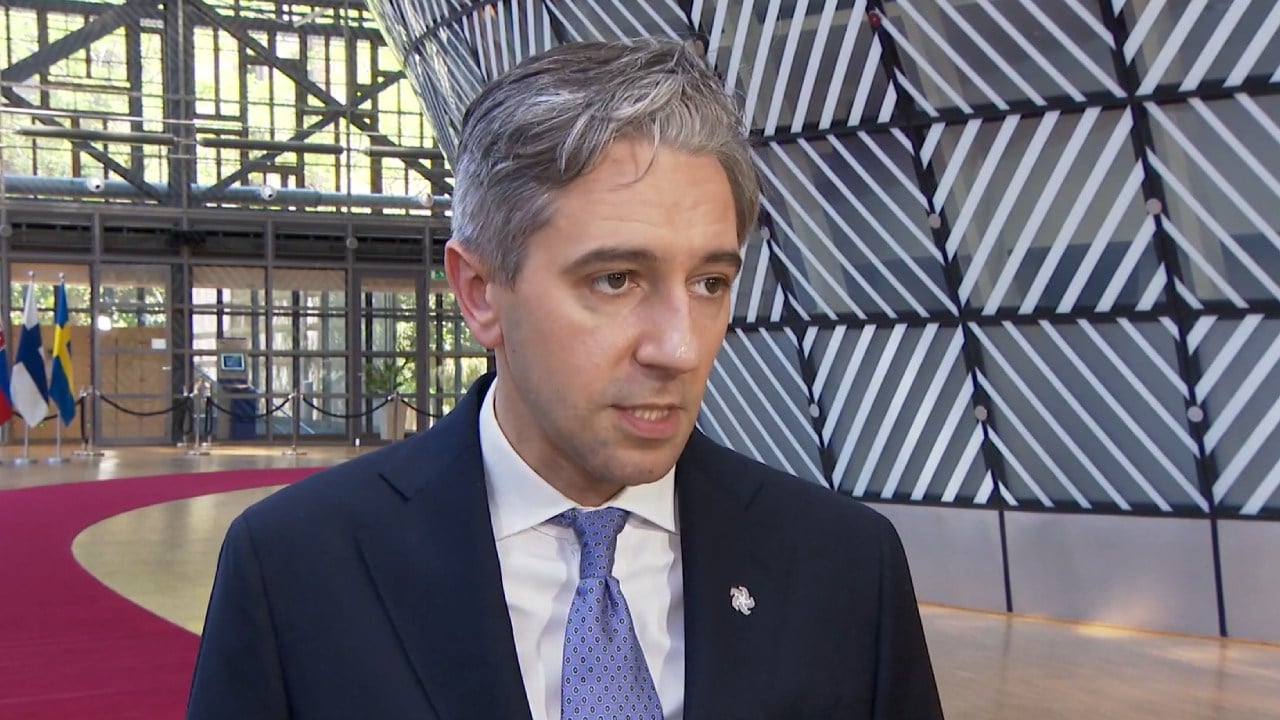
Launched by Irish Deputy Prime Minister and Minister for Finance Simon Harris, the strategy underpins the most significant strengthening of Ireland’s financial crime framework in years. It aims to deliver a whole-of-government approach to prevent criminals, fraudsters and terrorist financiers from exploiting the state’s financial system.

“Criminal organisations are becoming increasingly sophisticated,” Harris said in a statement. “They are exploiting new technologies, crypto-assets and complex international financial networks to conceal criminal profits. Government must continue to stay ahead of those threats.”

Preparation of the strategy follows the recently published 2026 National Risk Assessment on Money Laundering, Terrorist Financing and Proliferation Financing, alongside its associated Priority Action Implementation Plan. Built around five strategic priorities—strengthening national coordination, better understanding risks, delivering a stronger regulatory framework, building capability, and enhancing international cooperation—the initiative sets out several key reforms.

These include strengthening anti-money laundering rules for crypto-assets and digital transfers to make anonymous movement of funds more difficult, as well as delivering Ireland’s implementation of the European Union’s new anti-money laundering legislative package.

It also seeks to increase transparency around company ownership and introduce new disclosure requirements for limited partnerships and higher-risk corporate vehicles to stop criminals from hiding behind complex corporate structures. The government also wants to modernize financial intelligence capabilities and enhance the State’s ability to detect cyber-enabled fraud, sanctions evasion, and emerging financial crime threats.

Strengthening intelligence sharing between government departments and the supervision of financial institutions, and improving oversight of vulnerable sectors, including gambling.

According to a statement, the strategy is also designed to support Ireland’s preparations for its upcoming mutual evaluation by the Financial Action Task Force (FATF).

“Today’s launch sends a clear message: Ireland will not be a safe place to launder criminal proceeds,” Harris said. “We will continue to pursue organised criminals, protect our financial system and safeguard Ireland’s reputation as one of the safest and most trusted places in Europe to live, work and do business.”

Department officials confirmed that implementation of the strategy is already underway through cooperation between government departments, law enforcement, regulators, and the private sector.

Son Dakika

Hiçbir son dakika haberini kaçırmayın

Advertisement

House — Advertise on NewsLayer
NewsLayerAd

Sourced by

Originally reported by Bitcoin News

NewsLayer coverage based on externally reported material.

The Daily Brief

The onchain economy, before your day starts.

Curated markets, onchain insights, and key headlines — delivered every weekday morning.

Weekdays · Free · ~5 minute read

İlgili Haberler