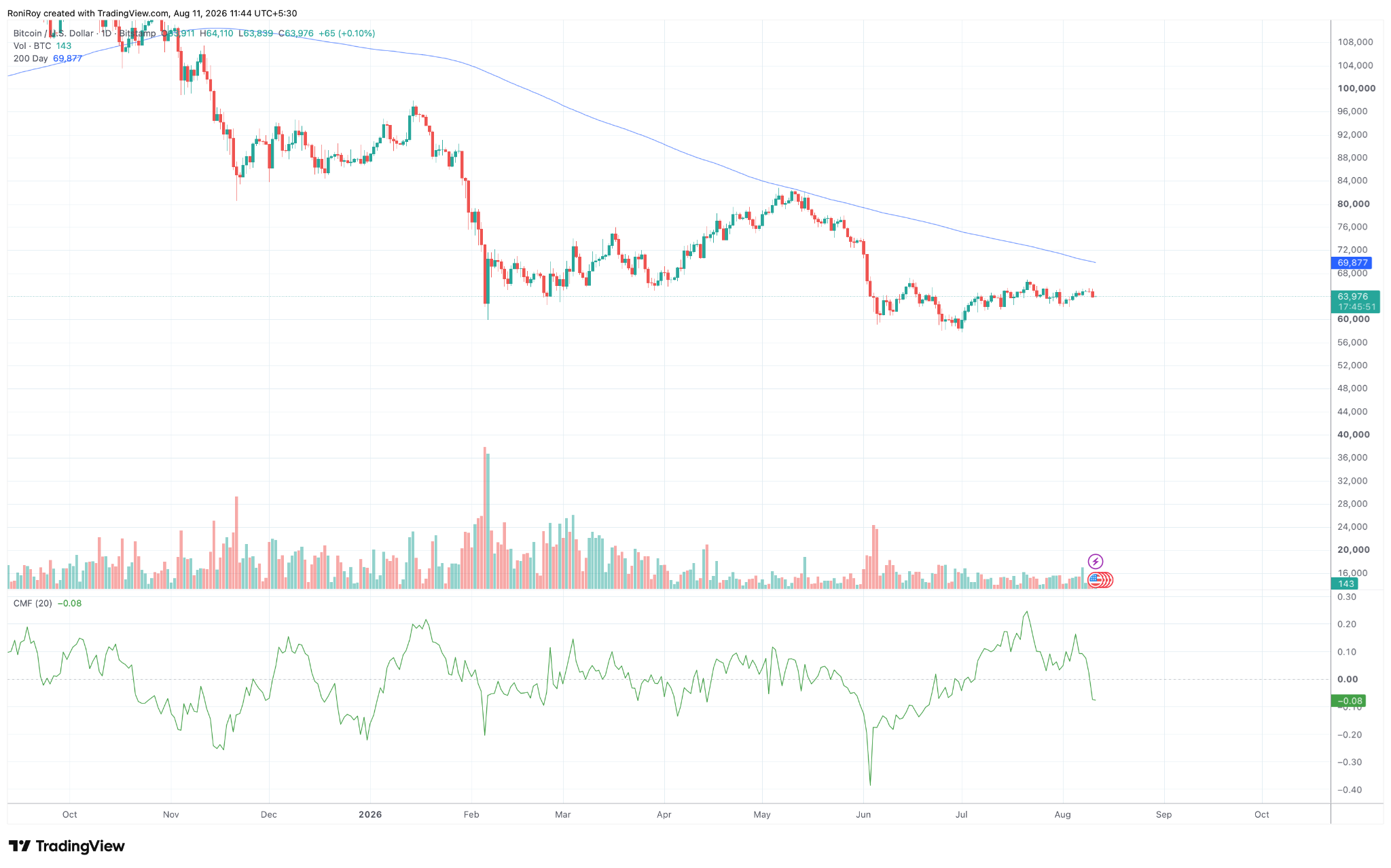


Bitcoin price has fallen about 1.8% over the past 24 hours to around $63,950 after another attempt to hold above $65,000 failed, and sellers pushed $BTC back toward its immediate support zone.
According to CoinGecko data provided for this report, Bitcoin traded as high as roughly $65,300 during the latest 24-hour period before sliding to around $63,750, leaving the cryptocurrency close to $63,950 at the time of writing.
Most of the decline occurred during a sharp move from above $64,700, followed by relatively narrow trading between roughly $63,800 and $64,100.
The decline has erased Bitcoin's latest attempt to recover from the $62,000 area, where buyers stepped in earlier this month.
$BTC had climbed back above $65,000 during that rebound but failed to establish sustained trading above the level, keeping the recovery inside the descending price structure that has developed over recent months.
Selling accelerated after Bitcoin reached approximately $65,300, making the latest move another rejection from the $65,000 to $65,500 resistance area.
With $BTC now back below $64,000, traders are also approaching a packed US macro calendar that could influence Treasury yields and expectations for Federal Reserve monetary policy.
Inflation data and Treasury auctions put Bitcoin traders on alert
The US Bureau of Labor Statistics has scheduled fresh inflation releases this week, giving markets another reading on price pressures before upcoming Federal Reserve decisions.
The Producer Price Index for July, for example, is scheduled for August 13 at 8:30 a.m. ET.
Inflation remains relevant for Bitcoin because unexpectedly strong price pressures could make easier monetary policy less likely and keep US yields elevated.
A weaker inflation reading could have the opposite effect by giving the Federal Reserve more room to consider lower rates.
With traders waiting for those numbers, Bitcoin's inability to clear $65,000 has left little technical support for buyers trying to extend the rebound.
Against this backdrop, the US Treasury's auction calendar includes $125 billion of three-year, 10-year and 30-year securities between August 11 and August 13, consisting of $58 billion in three-year notes, $42 billion in 10-year notes and $25 billion in 30-year bonds.
Demand at those auctions matters for risk markets because weak bidding can require higher yields to attract buyers.
Higher Treasury yields increase the return available from government debt and can make non-yielding assets such as Bitcoin less attractive on a relative basis.
The timing leaves $BTC facing both technical resistance and potential volatility from the bond market while traders wait for the week's inflation releases.
Institutional demand has provided some support, but recent ETF flows have not been enough to push Bitcoin through resistance.
US spot Bitcoin exchange-traded funds recorded approximately $853.5 million in net inflows over five consecutive sessions from August 3 through August 7, reversing the weaker flows seen before the streak.
Despite the inflows, $BTC failed to hold above $65,000 as selling continued around the resistance level.
This goes to show that incoming spot demand has not yet been enough to overcome selling around the mid-$60,000 region.
Bitcoin price must reclaim $65,000 to weaken downside pressure
Bitcoin's daily chart shows why the $64,000 to $65,500 region has become increasingly important.
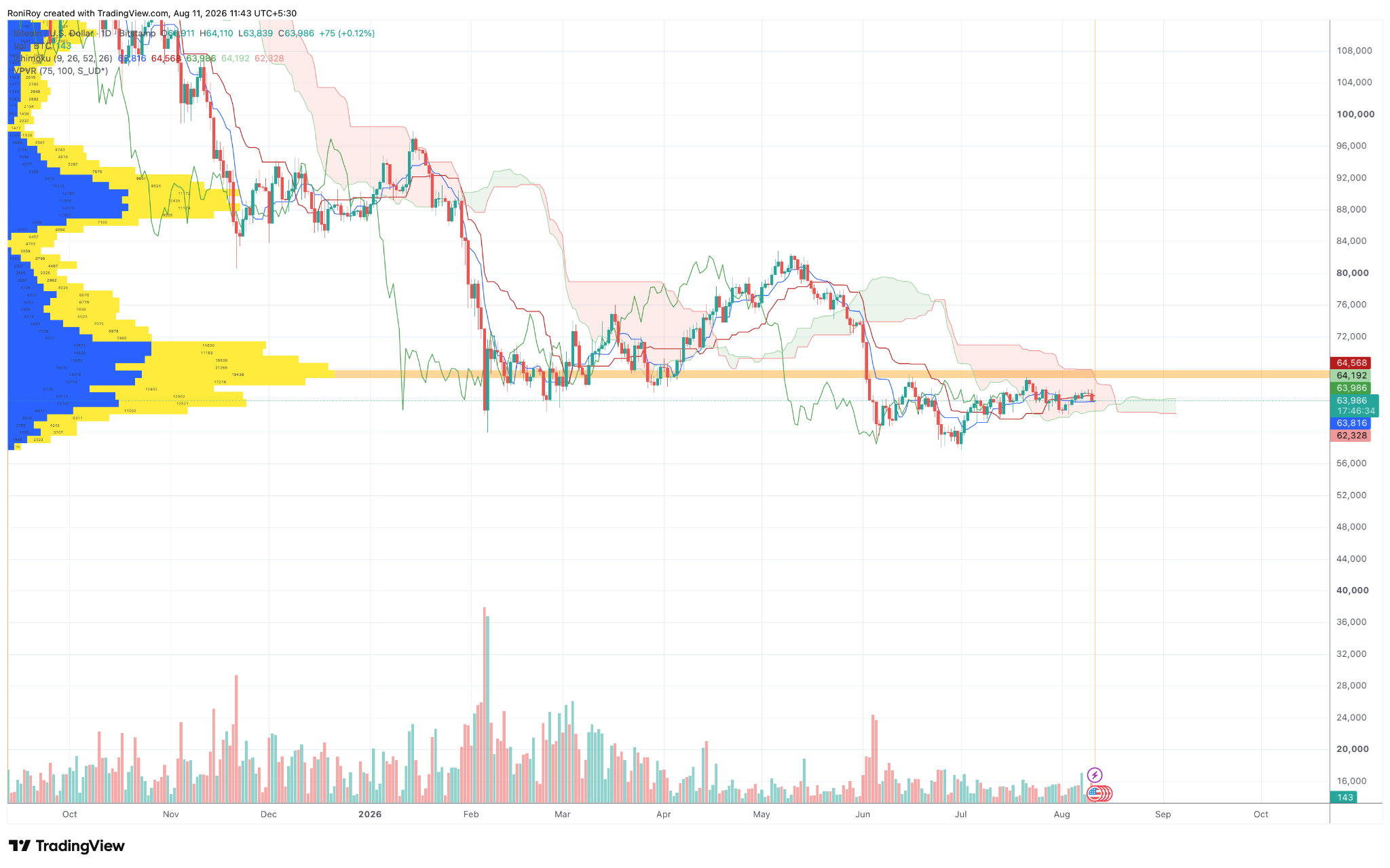
$BTC/USD 1-day price chart. Source: TradingView.
On the Ichimoku Cloud setup, $BTC trades around $63,900 while the Tenkan-sen sits near $64,568 and the Kijun-sen near $64,192.
Bitcoin has slipped below both lines following the latest rejection, leaving buyers without a clean short-term trend confirmation on the daily timeframe.
The projected Ichimoku cloud also sits close to the current price.